Even though wine's popularity is soaring everywhere, there are still a few people who don't care for grape juice in its more sophisticated form. Most of these individuals would say that it's the bitter taste that comes from the acidic/sugar balance that sets their pallets recoiling.
I'll bet most of those critics have never tried Ice Wine. Recently, I have given a few bottles away, and without exception, everyone has made it a point to tell me how much they loved the wine. The dessert wines usually come in 375 ml (half-size) bottles. Pinot Gris grapes are often used in the production of Ice Wine, along with Muscat and Gewurztraminer.
If you've never tried Ice Wine, look for it the next time you're in your local supermarket. if they don't carry it there, try a wine shop or a World Market.
Friday, December 16, 2005


Wednesday, November 23, 2005
What Wine Goes With Turkey?
"Which wine goes with turkey" is a question that comes up often during the holiday season. My personal choice would be a delicious bottle of Pinot Gris. However, your guests might prefer a red wine to a white. I'll list a couple of alternatives below, and let you make your own decision.
There are, of course, many wine selections that will go with turkey and traditional holiday meals.
If your guests prefer white wines, then Pinot Gris would be the natural choice for a match with turkey. There are many good ones, and you should be able to find a bottle or two at your supermarket in the $10 - $15 range. Another white wine that would win your guests over is a bottle of Viognier, which might be a little harder to find than the Pinot Gris, but is a crisp alternative to the ever-boring Chardonnay.
If you usually like wine with a little sweetness, try a White Zinfandel. If you think you'd like to try a dessert wine, you might look for a sparkling Early Muscat or a bottle of Vin Glace made with Pinot Gris grapes. The Vin Glace will usually come in the 375 ml bottle.
If your guests prefer red wines, consider a Pinot Noir to go with your turkey. It will have a richer fruit flavor than most white wines, but will match up well with the meal. Pinot Noir is traditionally very smooth, so it will not overwhelm the taste of the food.
Look for a bottle from Oregon, California, or France in the $15 - $20 range. Serve Pinot Noir very lightly chilled (about 60 degrees Fahrenheit). Put the Pinot Noir in the refrigerator for about 20 minutes before serving, and you will bring out the fruit flavors and will remove the alcohol taste that can overwhelm when served at room temperature.
I would avoid any bold reds, unless the meal features some form of red meat. That means leave the Cabernet Sauvignon in the cellar for a more opportune time.
There are, of course, many wine selections that will go with turkey and traditional holiday meals.
If your guests prefer white wines, then Pinot Gris would be the natural choice for a match with turkey. There are many good ones, and you should be able to find a bottle or two at your supermarket in the $10 - $15 range. Another white wine that would win your guests over is a bottle of Viognier, which might be a little harder to find than the Pinot Gris, but is a crisp alternative to the ever-boring Chardonnay.
If you usually like wine with a little sweetness, try a White Zinfandel. If you think you'd like to try a dessert wine, you might look for a sparkling Early Muscat or a bottle of Vin Glace made with Pinot Gris grapes. The Vin Glace will usually come in the 375 ml bottle.
If your guests prefer red wines, consider a Pinot Noir to go with your turkey. It will have a richer fruit flavor than most white wines, but will match up well with the meal. Pinot Noir is traditionally very smooth, so it will not overwhelm the taste of the food.
Look for a bottle from Oregon, California, or France in the $15 - $20 range. Serve Pinot Noir very lightly chilled (about 60 degrees Fahrenheit). Put the Pinot Noir in the refrigerator for about 20 minutes before serving, and you will bring out the fruit flavors and will remove the alcohol taste that can overwhelm when served at room temperature.
I would avoid any bold reds, unless the meal features some form of red meat. That means leave the Cabernet Sauvignon in the cellar for a more opportune time.
Wednesday, November 16, 2005
Oregon Pinot Gris is Washington Times Wine of the Week
From the Washington (DC) Times:
"Pinot gris is something of a chameleon. Pick the grapes early in the harvest and the wine most likely will taste steely. Pick them late, and it will seem almost honeyed. But pick somewhere in the middle, and the wine will be redolent of crisp apples and pears and just right for serving at Thanksgiving."
Read the rest of the article here.
"Pinot gris is something of a chameleon. Pick the grapes early in the harvest and the wine most likely will taste steely. Pick them late, and it will seem almost honeyed. But pick somewhere in the middle, and the wine will be redolent of crisp apples and pears and just right for serving at Thanksgiving."
Read the rest of the article here.
Wednesday, November 02, 2005
What In the World is Pinot Gris?
Pinot Gris (or Tokay Pinot Gris) is a white wine grape of species Vitis Vinifera related to Pinot Noir which goes by a lot of other names:
Pinot Grigio (Italy)
Pinot Beurot (Loire Valley, France)
Ruländer (Austria and Germany, Romania, sweet)
Grauburgunder or Grauer burgunder (Austria and Germany, dry)
Grauklevner (Germany)
Malvoisie (Loire Valley, France and Switzerland)
Tokay d'Alsace (Alsace) (currently being renamed due to EU regulations)
Auxerrois Gris (Alsace)
Fromentau (Langudoc, France)
Fromentot (France)
Fauvet (France)
Gris Cordelier (France)
Grauer Mönch (Germany)
Monemrasia
Crvena Klevanjka (Croatia)
Sivi Pinot (Slovenia)
Szürkebarát (Hungary)
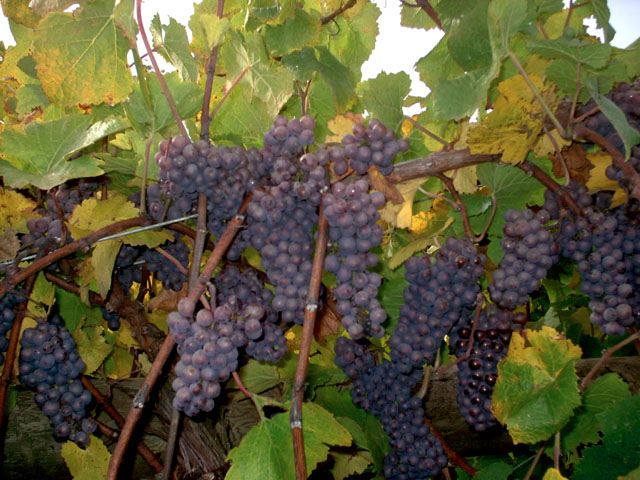
"Pinot" means "pinecone" in French, and "gris" means gray. The grapes grow in small clusters (hence the pinecone shape), and upon ripening, often display a pinkish-gray hue, although the colors can vary from blue-gray to pinkish-brown.
Pinot Gris is called Pinot Grigio in Italy, and the grape is grown in many regions, although, arguably, most successfully in Alsace (France), Italy, Germany, and Oregon. In the United States, Pinot Gris has recently supplanted Sauvignon Blanc as the most popular white wine grape next to Chardonnay.
Pinot Gris produces wines that are generally fruity in aroma, with flavors of honey, apple, pear, vanilla, oak, and citrus. The flavors can vary from region to region, but a good Pinot Gris will display crisp acidity, balanced with silky sweetness, resulting in a complex array of flavors on the pallet. Pinot gris goes well with foods typically associated with white wines, including fish, seafood, chicken, pork, and Asian cuisine.
Pinot Gris is thought to have originated in the Burgundy region of France, and was planted in Northern Europe for many years before making its way to Oregon in the 1960's. The grape is presently grown in many different areas, but prefers the relatively cool climate of places like France, Germany, Italy and Oregon, where the long (but not too hot) summer days mingled with cool autumn weather bring the grapes into perfect ripeness.
Pinot Gris grapes grown in Italy (Pinot Grigio) usually produce a somewhat wanting, light-colored wine with crisp acidity. German Pinot Gris tends to be medium-bodied, with good balance between sugar and acidity. Grapes grown in Oregon tend to produce a wine that is medium-bodied, exhibiting strong fruit flavors and aromas and superb crispness. Pinot Gris produced from grapes grown in the Alsace region of France has proven to show full-bodied, floral flavors, and a deep viscosity with a long-lasting finish.
Pinot Gris made from grapes grown in other regions can also be delicious, but generally don't deliver the same excellent qualities that people have come to expect from wines made in the regions listed above. California is one area where Pinot Gris is grown, but the wines made there tend to be flabby, losing their complexity due to the warmer weather. In fact, Pinot Gris produced in California is often called Pinot Grigio because of the similarity in style to the wines from Italy.
Technorati: Wine
Pinot Grigio (Italy)
Pinot Beurot (Loire Valley, France)
Ruländer (Austria and Germany, Romania, sweet)
Grauburgunder or Grauer burgunder (Austria and Germany, dry)
Grauklevner (Germany)
Malvoisie (Loire Valley, France and Switzerland)
Tokay d'Alsace (Alsace) (currently being renamed due to EU regulations)
Auxerrois Gris (Alsace)
Fromentau (Langudoc, France)
Fromentot (France)
Fauvet (France)
Gris Cordelier (France)
Grauer Mönch (Germany)
Monemrasia
Crvena Klevanjka (Croatia)
Sivi Pinot (Slovenia)
Szürkebarát (Hungary)
"Pinot" means "pinecone" in French, and "gris" means gray. The grapes grow in small clusters (hence the pinecone shape), and upon ripening, often display a pinkish-gray hue, although the colors can vary from blue-gray to pinkish-brown.
Pinot Gris is called Pinot Grigio in Italy, and the grape is grown in many regions, although, arguably, most successfully in Alsace (France), Italy, Germany, and Oregon. In the United States, Pinot Gris has recently supplanted Sauvignon Blanc as the most popular white wine grape next to Chardonnay.
Pinot Gris produces wines that are generally fruity in aroma, with flavors of honey, apple, pear, vanilla, oak, and citrus. The flavors can vary from region to region, but a good Pinot Gris will display crisp acidity, balanced with silky sweetness, resulting in a complex array of flavors on the pallet. Pinot gris goes well with foods typically associated with white wines, including fish, seafood, chicken, pork, and Asian cuisine.
Pinot Gris is thought to have originated in the Burgundy region of France, and was planted in Northern Europe for many years before making its way to Oregon in the 1960's. The grape is presently grown in many different areas, but prefers the relatively cool climate of places like France, Germany, Italy and Oregon, where the long (but not too hot) summer days mingled with cool autumn weather bring the grapes into perfect ripeness.
Pinot Gris grapes grown in Italy (Pinot Grigio) usually produce a somewhat wanting, light-colored wine with crisp acidity. German Pinot Gris tends to be medium-bodied, with good balance between sugar and acidity. Grapes grown in Oregon tend to produce a wine that is medium-bodied, exhibiting strong fruit flavors and aromas and superb crispness. Pinot Gris produced from grapes grown in the Alsace region of France has proven to show full-bodied, floral flavors, and a deep viscosity with a long-lasting finish.
Pinot Gris made from grapes grown in other regions can also be delicious, but generally don't deliver the same excellent qualities that people have come to expect from wines made in the regions listed above. California is one area where Pinot Gris is grown, but the wines made there tend to be flabby, losing their complexity due to the warmer weather. In fact, Pinot Gris produced in California is often called Pinot Grigio because of the similarity in style to the wines from Italy.
Technorati: Wine
Friday, October 28, 2005
What is Ice Wine?
Ice Wine, or Eiswine (German), is wine made from frozen, late-harvest grapes. The grapes are generally left on the vine longer to ensure a higher sugar concentration. Brix levels are typically in the 30+ range for Ice Wine grapes. In certain cold-weather areas, the grapes must be frozen by a natural frost. In other areas, artifical freezing of the grapes is acceptable.
Pinot Gris grapes can make an outstanding Ice Wine, sometimes called Vin Glace. The wine is usually sold in 375 ml bottles, and should be available at many fine wine outlets.
Wine
Pinot Gris grapes can make an outstanding Ice Wine, sometimes called Vin Glace. The wine is usually sold in 375 ml bottles, and should be available at many fine wine outlets.
Wine
Tuesday, October 25, 2005
Harvest Has Ended
For most Pinot Gris vineyards, the harvest has finished, and the leaves will turn gold on their way to dormancy. Contrary to popular belief, most wines do not improve with age. Pinot Gris is one such varietal, usually having a life of five to seven years before the wine quality deteriorates. Pinot Gris can be imbibed very soon after the grapes are harvested and the wine is made. Usually, a 30-day period is recommended for the wine to be in the bottle before it is consumed to avoid "bottle shock".
Monday, October 17, 2005

Subscribe to:
Posts (Atom)